

Is 24/7 Home Repair Service Reliable? What to Know
Table of Contents
What 24/7 Availability Actually Means
How to Find a Reliable Emergency Plumber and Repair Service
Emergency Plumber Response Time: What's Realistic
Understanding 24-Hour Plumber Cost and Pricing
The four cost components of an emergency call
How after-hours pricing actually works
Reading a written estimate line by line
Comparing providers fairly
Critical Questions to Ask an Emergency Repair Service
Reliability Factors Beyond Star Ratings
What to Do While Waiting for Your Technician
First: contain the problem
Second: document for insurance and warranty
Third: communicate with dispatch
Fourth: know when to escalate
General protocol for every call
Frequently Asked Questions
Last Updated: October 21, 2026
What 24/7 Availability Actually Means
When a home repair service advertises 24/7 availability, most homeowners assume a technician will arrive at 2 AM on a Sunday.
True 24/7 emergency service means someone answers the phone when you call, not that a technician appears within an hour. Many services run a round-the-clock dispatch center, then schedule technicians from their available pool.
At TNT Repairs It, we understand this distinction matters.
The key question to ask any 24/7 home repair service reliable provider: "What's your average response time during peak hours?" Not their best-case scenario, their typical performance when demand is highest. That answer tells you whether their 24/7 claim translates to actual help.
How to Find a Reliable Emergency Plumber and Repair Service
Finding a reliable emergency plumber starts with verification, not just reviews.

Start by checking licensing and insurance.
Next, look for businesses operating in your area for several years. New companies can be excellent, but established ones have a track record.
Call and speak to a real person, not a chatbot.
Ask about their emergency call-out process. Do they charge a diagnostic fee just to assess the problem? What happens if you call at 3 AM versus 3 PM?
Emergency Plumber Response Time: What's Realistic
Response time is where promises often diverge from reality.
In most urban areas, a realistic response time for an emergency call is 30 minutes to 2 hours during business hours.
Some services advertise "same-day service" or "rapid response," but that language is vague, same-day could mean 11:59 PM.
Weather affects response times too. During a winter storm, every heating service in the region gets flooded with calls and waits stretch.
Track the actual time from your call to the technician's arrival. One missed window could be traffic; repeated misses suggest a systemic problem with dispatch or staffing.
Understanding 24-Hour Plumber Cost and Pricing
Emergency repair pricing is higher than standard daytime service, and that's standard across the industry. The question isn't whether emergency pricing exists, it's whether the pricing is transparent, itemized, and comparable across providers.
The four cost components of an emergency call
A legitimate 24/7 repair bill typically breaks into four parts. Ask each provider to quote all four before dispatch:
Dispatch or trip fee, a flat charge for sending a technician, often collected whether or not work is performed. Some providers waive it if you approve the repair.
Diagnostic fee, the charge for identifying the problem. It may be flat or hourly, and it may or may not roll into the repair price if you hire them.
Labor rate, the hourly or flat-rate charge for the repair itself. After-hours, weekend, and holiday rates are commonly higher than weekday daytime rates; ask for each tier in writing.
Parts and materials, often marked up over retail. Ask whether markup is a flat percentage or a fixed schedule, and whether you can supply your own parts (many providers will not warranty customer-supplied parts).
Pro Tip Ask for the after-hours labor rate, the holiday rate, and the diagnostic fee as three separate numbers. A provider who quotes only one blended "emergency rate" is hiding the structure, not simplifying it.
How after-hours pricing actually works
There are three common models, and they produce very different bills:
Flat emergency rate, one price regardless of time of day. Easiest to budget, but the flat rate is usually set high enough to cover the worst case.
Tiered rate, a standard rate during business hours, a higher rate evenings and weekends, and a premium rate on holidays. Ask for the exact cutoffs (for example, whether Friday at 6 PM counts as weekend).
Hourly plus minimum, an hourly rate with a minimum charge (often one or two hours) for after-hours calls. A 20-minute fix can still bill the minimum.
A common pattern is a trip fee plus a one-hour minimum plus parts. That combination means the smallest possible after-hours bill is often the trip fee plus one hour of labor, even if the repair takes ten minutes. Knowing this before you call prevents the most common billing surprise.
Reading a written estimate line by line
A written estimate is only useful if it is specific. Before authorizing work, confirm it states:
The trip fee and diagnostic fee as separate line items
The labor rate tier that applies to your call time
Whether parts are included or billed separately, and at what markup
Any minimum charge and whether it applies
Whether the diagnostic fee is credited toward the repair if you approve it
The warranty terms on labor and on parts
Whether the estimate is a fixed price or a "not to exceed" cap
Watch Out A verbal estimate is not a price. If a provider will not put the four cost components in writing before starting, treat that as a reliability signal, not a paperwork inconvenience.
Comparing providers fairly
To compare two 24/7 providers, request the same four numbers from each for the same hypothetical job at the same time of day. A lower hourly rate with a high trip fee and a two-hour minimum can cost more than a higher hourly rate with no minimum. The only fair comparison is the total estimated bill, in writing.
At TNT Repairs It, we itemize the trip fee, diagnostic fee, labor tier, and parts before work begins so you can see exactly what you are approving.
Critical Questions to Ask an Emergency Repair Service
Before you hire any 24/7 home repair service reliable provider, ask these questions:
About availability and response:
How many technicians do you have available for emergency calls?
What's your average response time during peak hours?
Do you have technicians stationed in my area, or do they dispatch from a central location?
What happens if all technicians are busy when I call?
About qualifications:
Are your technicians licensed and insured?
Do they carry background checks?
What training or certifications do they have?
Can you provide references from customers in my area?
About the work:
Do you guarantee the work you perform?
If something goes wrong after you leave, what's your warranty?
Will you provide a written estimate before starting?
Do you explain what you're doing and why?
About pricing:
What's your diagnostic fee?
What's your hourly rate for emergency calls?
How much are parts marked up?
Is there a minimum charge for after-hours service?
About reliability:
How long have you been in business?
What's your cancellation or no-show rate?
Do you keep appointments as scheduled?
How do you handle emergencies that take longer than expected?
Listen carefully to how they answer. Vague responses suggest they haven't thought through their own processes. Clear, specific answers suggest a business that knows what it's doing.
Reliability Factors Beyond Star Ratings
Customer reviews matter, but they're incomplete.
Look for patterns in reviews, not individual ratings.
Check whether the business responds to negative reviews.
Ask about their licensing history. Some states keep public records of complaints against licensed professionals.
Ask whether they carry bonding. Bonding protects you if the business fails to complete work or a technician causes damage.
Call the Better Business Bureau or your local consumer protection agency and ask if they have complaints on file (File a Complaint | Consumer Complaints).
What to Do While Waiting for Your Technician
An emergency at home is stressful, and the wait between your call and the technician's arrival is when damage either gets contained or gets worse. The steps below are organized by emergency type, followed by a general protocol for every call.
First: contain the problem
Plumbing emergencies
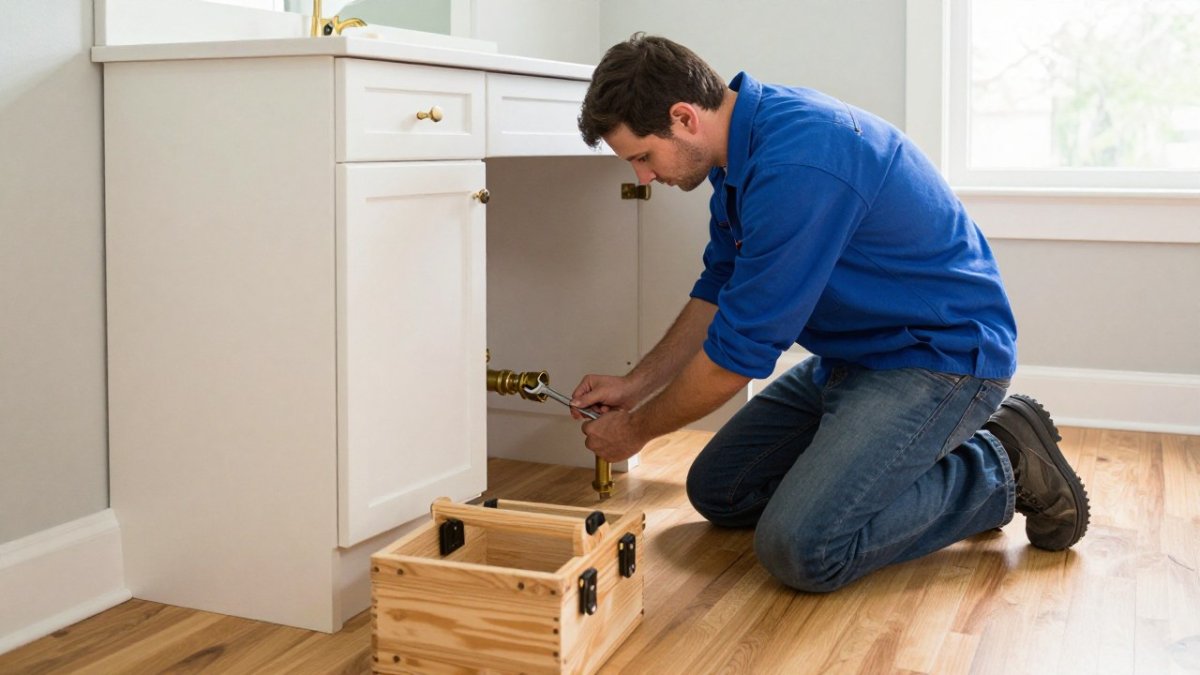
Locate your main water shut-off valve before you need it. If a pipe bursts, shutting off the main stops damage from spreading. If you do not know where it is, ask the dispatcher to walk you through finding it while the technician is en route.
For an overflowing toilet, turn off the supply valve behind the unit.
Place buckets or towels to catch active leaks and protect floors, but do not block the technician's access to the shut-off or the fixture.
Do not attempt a repair yourself unless you have plumbing experience. A temporary fix that fails can cause more damage than the original leak.
Electrical emergencies
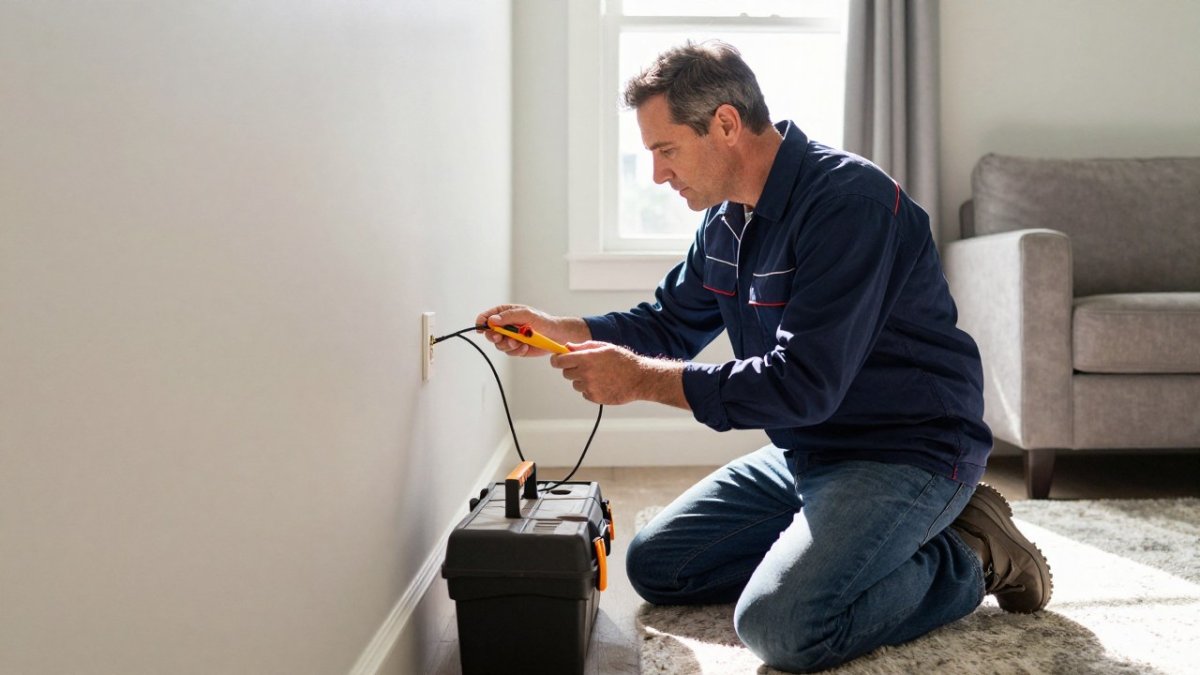
Do not touch exposed wires or wet areas near outlets.
If there is a burning smell, turn off the breaker for that circuit only if you can reach the panel without touching water or damaged wiring.
Unplug devices that may be causing the problem only if it is safe to do so.
Keep children and pets away from the affected area.
Heating emergencies
Check the thermostat is set to heat and the setpoint is high enough.
Check the furnace circuit breaker; a simple reset sometimes solves the problem.
Do not relight a gas pilot unless you know the exact procedure. Call the technician.
Close off unused rooms to concentrate heat where you need it.
Second: document for insurance and warranty
Take photos and short videos of the damage before anything is moved or repaired. Capture the affected area, water lines, the breaker panel if relevant, and the model and serial plates on equipment. If the repair is later covered by homeowners insurance or a manufacturer warranty, this record is often the difference between a paid claim and a denied one. Keep the written estimate and final invoice with the photos.
Third: communicate with dispatch
While you wait, confirm three things with the dispatcher:
The arrival window, ask for a specific window, not "soon," and ask for a call or text when the technician is en route.
The technician's name and license or ID number, a legitimate provider can give you this before arrival. Verify it against the state licensing board if you have not already.
The escalation path, ask what to do if the technician has not arrived by the end of the window. A reliable provider has a named person or number for that call.
Key Takeaway A provider that cannot give you an arrival window, a technician name, and an escalation contact before dispatch is telling you how it handles every call. Treat that as your reliability assessment, not a one-off inconvenience.
Fourth: know when to escalate
Some situations should not wait for a standard dispatch. Call 911 or your utility's emergency line first, then the repair provider, if you smell gas, see smoke or flames, have standing water near an electrical panel, or have anyone in the home who is unsafe. For gas odors, leave the home and call from outside. For electrical hazards, do not re-enter the affected area.
General protocol for every call
Have your address, a clear description of the problem, and your account or prior service records ready.
Clear a path to the problem area and secure pets.
Confirm the written estimate before work begins and keep a copy.
Ask the technician to explain what was done and what to watch for after the repair.
At TNT Repairs It, our dispatchers give you an arrival window, the technician's name, and an escalation number before the truck leaves. If the window changes, we call you.
Frequently Asked Questions
How can I verify that a 24/7 repair service will actually respond quickly in an emergency?
Ask the service for their average response time in writing and request references from recent customers who called during off-hours. Verify they have dispatchers available 24/7, not just an answering service. Check whether they maintain technician availability across your area or rely on contractors.
What questions should I ask an emergency repair service before booking?
Ask about licensing and insurance, their experience with your specific issue, whether they provide estimates before starting work, their cancellation policy, and how they handle after-hours pricing. Request clarity on their service area and whether they guarantee arrival within a stated timeframe. Ask if they're a local company or part of a larger chain. Understanding their accountability structure helps predict reliability.
Is there a standard cost for emergency plumber services, or does it vary widely?
Emergency plumber costs vary based on the time of day, your location, the repair complexity, and whether it's a simple fix or requires replacement parts. After-hours calls typically include service fees separate from labor and materials. Rather than guessing at costs, contact local providers directly for quotes. Reputable services provide estimates before starting work, and some offer financing options for larger repairs. Comparing quotes from multiple providers helps you understand realistic pricing for your specific situation.
What makes one 24/7 repair service more reliable than another?
Reliability depends on their training and certification levels, how they track and respond to calls, and their track record keeping appointments. Licensed and insured services with local presence tend to be more accountable than large chains. Customer reviews mentioning punctuality and work quality matter more than star ratings alone. Services that provide clear communication about arrival windows and keep customers informed during wait times demonstrate stronger reliability.
Call Us!

Comments